The Data Center Strikes Back
"No. I am your father."

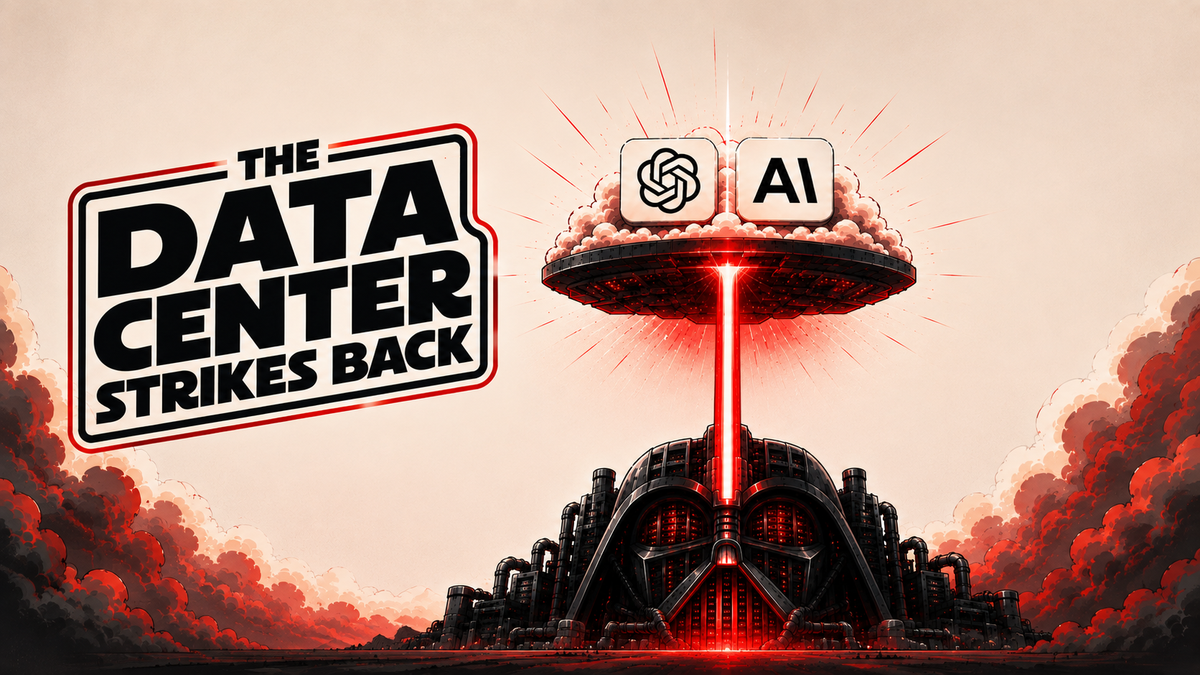
"No. I am your father." –Darth Vader
Opening Notes
In the AI Tech Playbook series from last year, we broke down the AI tech stack into four layers, from the bottom up:
- Infrastructure Layer
- Models Layer
- Application Layer
- Interface Layer
I went on to explain that the "AI tech stack has four distinct layers — each with different economics, competitive dynamics, and investment characteristics. Now understand that each layer needs the other ones to achieve an objective, we will go into that later."
I then explained what constitutes each separate layer.
- Infrastructure Layer: This is the physical foundation of AI. Semiconductors, data centres, networking, power. This is where electricity powers data centres, which are packed with semiconductors that provide all the compute to the layers above. Without this, the Models cannot operate.
- Model Layer: Here sit the foundational models and training that create AI capabilities. The models need compute to be trained — and they get that compute from the infrastructure layer sitting under them in the stack.
- Application Layer: In this layer sits the software that leverages AI models to provide a certain service. Many times this software just makes a pre-AI task better (think 2.0). Other times the software does something that could not be done pre-AI (think 3.0).
- Interface Layer: The front-end platforms and ecosystems where users actually interact with AI — search bars, chat windows, voice assistants, apps. Control here means controlling access, usage patterns, and downstream economics. Think iOS, WhatsApp, X — they don’t build the models, but they decide which ones reach users.
Value flows upward through the stack, but profits don’t always follow. Each layer has its own capital requirements, business economics and competitive dynamics.
In some cases the profit motive is not the first concern of those funding the venture. This dynamic could be taking place in any of the layers in the stack.
Right now, infrastructure is generating the cash, models are still burning it and apps are trying to differentiate themselves, fund themselves adequately and hopefully make a buck. Some have gained enough scale to be printing money, others rely on VC funding to survive another quarter.
The app layer changes faster than the model layer, and the model layer changes faster than infrastructure. This is another distinction between layers — speed of change.
Last month we published Stack Alliances: Nvidia x Microsoft to expand on an alliance in the infrastructure layer of the stack. As we said, the tech stack is very fluid and there is both upward and downward mobility between layers.
 Philoinvestor
Note: The stack cannot be segregated on a company-by-company basis. One company can operate in multiple layers of the stack.
For example, Anthropic builds models, uses them to power applications (e.g. Claude Code) and distributes them via their own interface (Claude.ai). So does OpenAI.
An AI company can be full stack, half stack or part stack. Each case is different. And as we explained above: the value flows from the bottom-up but the money does not necessarily do the same.
Amidst a race to the bottom and unstoppable creative destruction – every AI company is first trying to survive, then prosper.
"In the short run, capitalism is a hype machine. In the long run, it's an economics machine."
–Philo
Hype Economics
OpenAI and Anthropic are reported to have hit annualised revenues of $40bln to $70bln each.
The precise details don't matter because we don't have solid numbers, their reporting is slippery (see below) and it changes by the day.
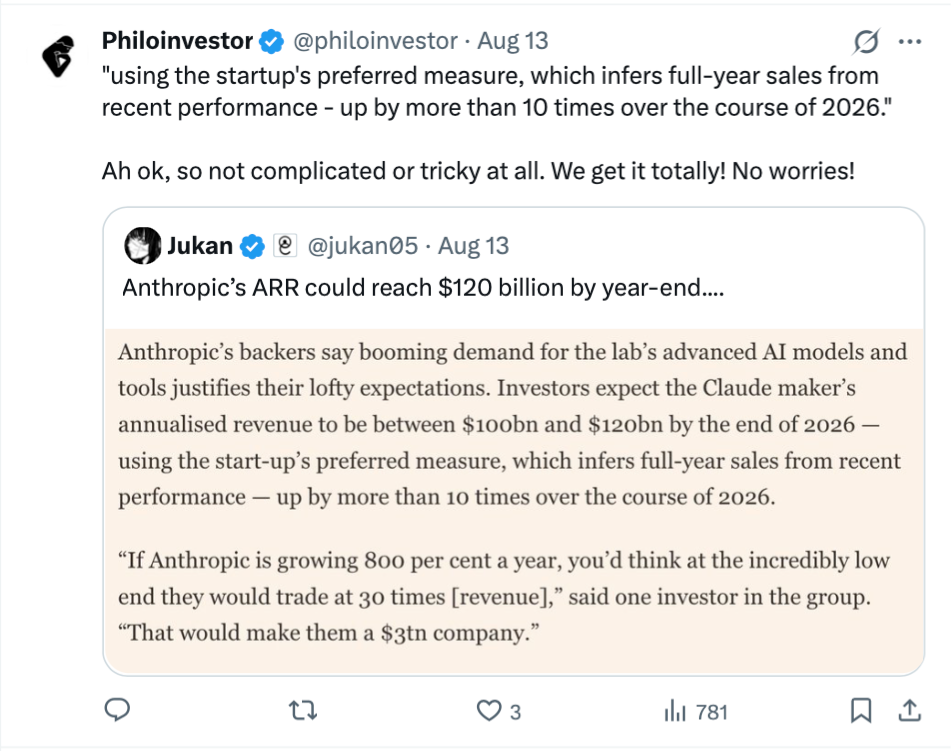
The FT (excerpt above) reports that investors expect Anthropic to hit annualised revenues of >$100bln by the end of the year. This does not mean >$100bln in annual revenues – it just means December's revenue will be >$100bln when multiplied by 12.
SURVIVE THE LOSSES
Which begs the question, what are the incentives of these two AI labs as they ramp up to IPO? It's simple, raise more capital and try to survive.

Which means they will massage the numbers and say what people want to hear, until they get the big bucks and IPO.
- Remember when AI was going to disrupt and kill every software company out there?
- Remember when AI was going to replace humans everywhere?
- It used to be "cool" to say that, it used to be what investors and markets wanted to hear.
Not anymore. One-minute excerpt from Sam Altman's interview with David Senra, walking all those statements back here. Sam was one of those who doubled down on those pump statements, now it seems they decided on a more measured PR approach!
Side note: Now apparently it's cool to say potential annual revenue is $30 trillion. This is what Anthropic is planning to pitch to investors as it ramps up for IPO. But this was to be expected.
OpenAI and Anthropic saw Elon's Alchemy and want some alchemy of their own
 Philoinvestor
Trillion-Dollar Valuations
Hype economics has enabled OpenAI and Anthropic to touch ~$1 trillion valuations, a more than 30X return in 3 years.
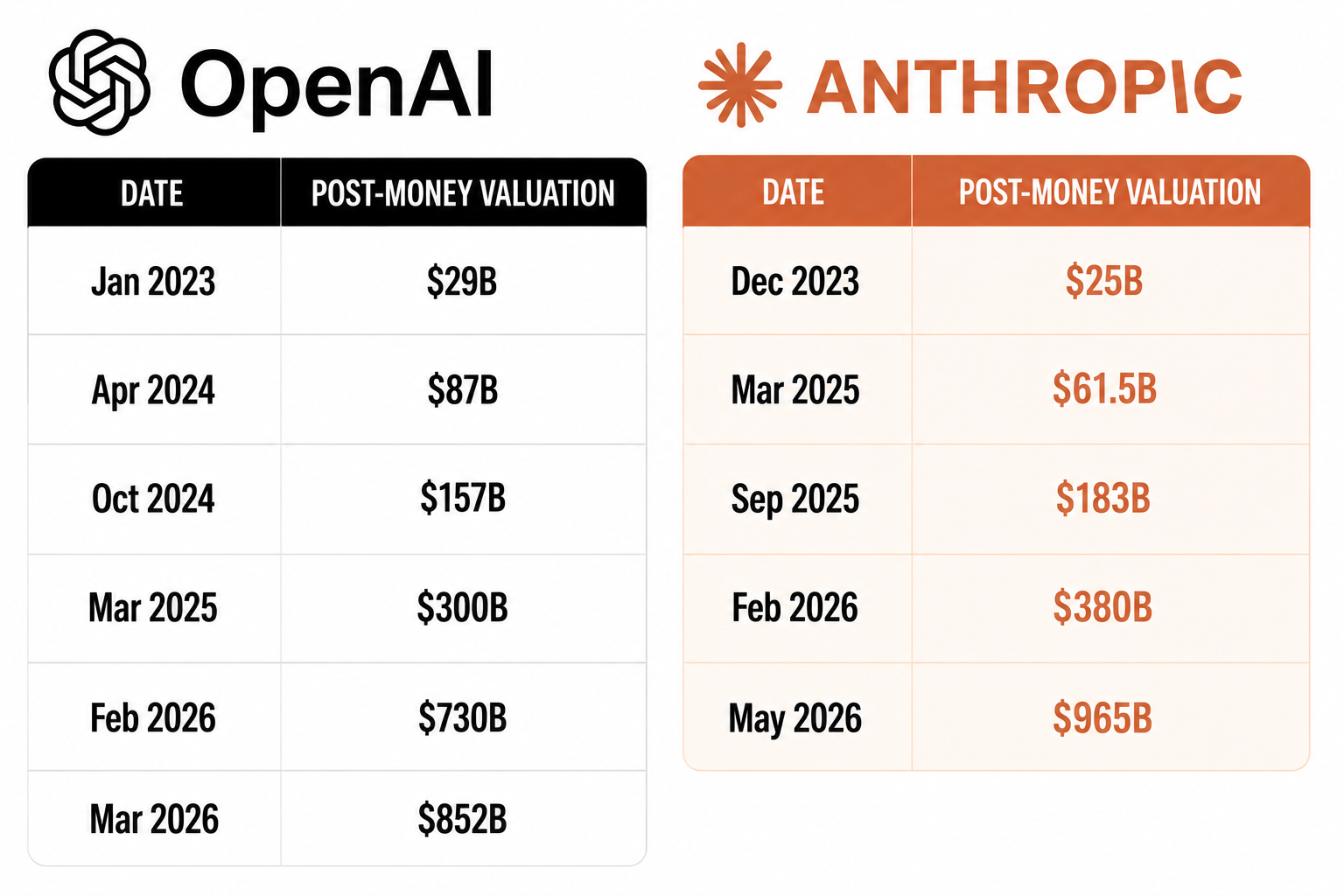
And they have achieved this dramatic increase in their private valuations while racking up tens of billions in losses. Because their valuation increases were tied to their user and revenue growth – regardless whether that growth was profitable or not!
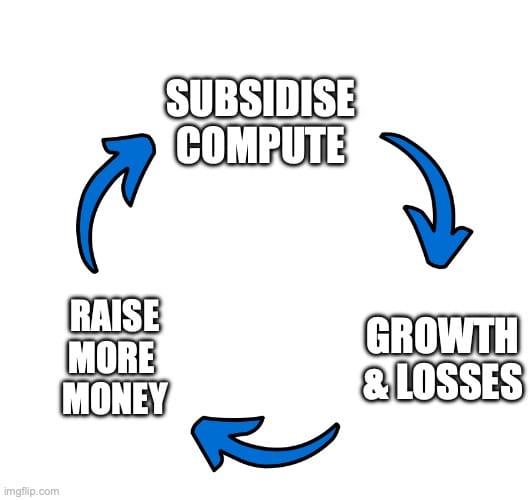
But they forget to tell you that the growth in compute usage was actually subsidised by those losses.
And they use those trillion-dollar valuation to raise $100bln funding rounds and continue the race to the bottom. Better models, more features, more compute.
The question now is what happens when the Hype runs out.
And who is Darth Vader in this story?...