Your money is no longer Triple A
What happens when the market starts pricing bonds accordingly?

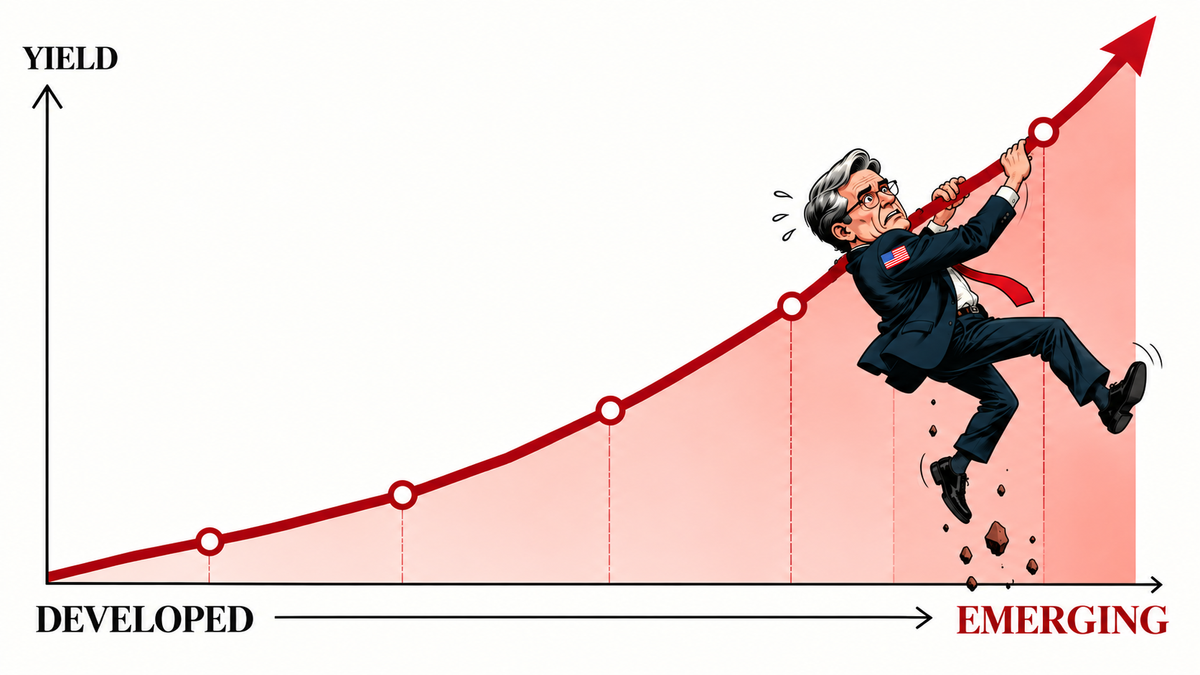
Bessent's relapse is a symptom of an ailment that no political power has managed to cure yet.
The United States cannot cut its budget.
For decades this wasn't a problem. Debt-to-GDP was manageable – and the US was the only game in town. There was no ascending East and no alternatives.
The US was the undisputed hegemon of the world – with no competitor in financial, economic or military supremacy. And everyone else was forced to play along.
Then, the breakdown of the Bretton Woods system brought on a new state of affairs, but the underlying reality remained the same. The US was still the hegemon, but gold was removed from the equation.
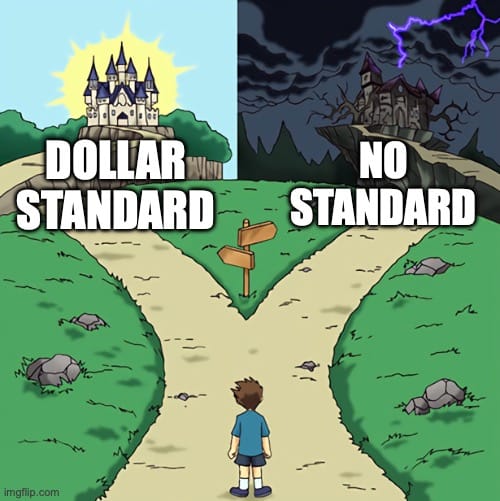
Instead of foreign creditors holding gold claims on the US – now they simply held US Dollars under the Dollar Standard.
The Dollar Standard
In Bessent's Detox from last April, I explained that the incoming Administration's plan to detox the economy from excessive government spending was not as easy as Trump/Bessent seemed to think.
And that there would be dire consequences for the economy...
It turns out the duo didn't even try reducing spending – they just pushed the pedal even further.
As we touched on in Your 401(K) is a Ponzi – the 2026 deficit is expected to be $2.1 trillion (up from $1.8 trillion in 2025). Nothing is stopping this train.
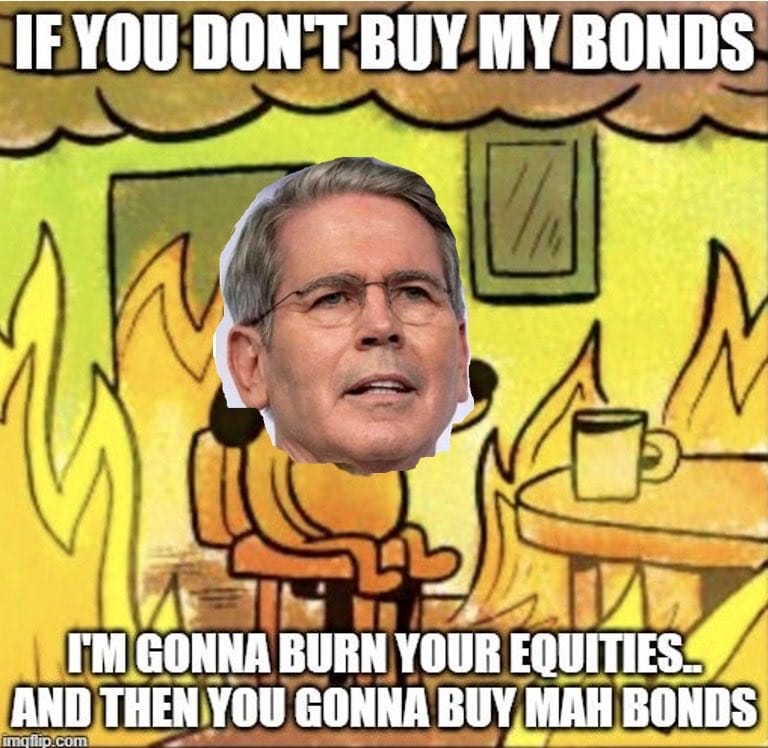
And this creates a problem that can't be solved by $6bln debt buybacks or talking down yields. Heck, it can't even be solved by an equity sell-off...
Yes, a bear market in stocks would tactically move some capital back into sovereigns – but this problem can't be fixed by cyclical drops in yields.
But the fiscal problem in the US (and in the broader West) isn't something new – so why should you care now?
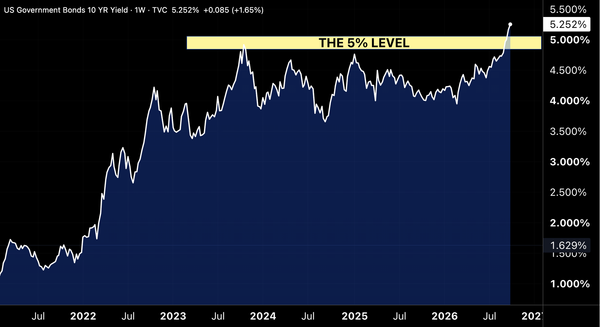
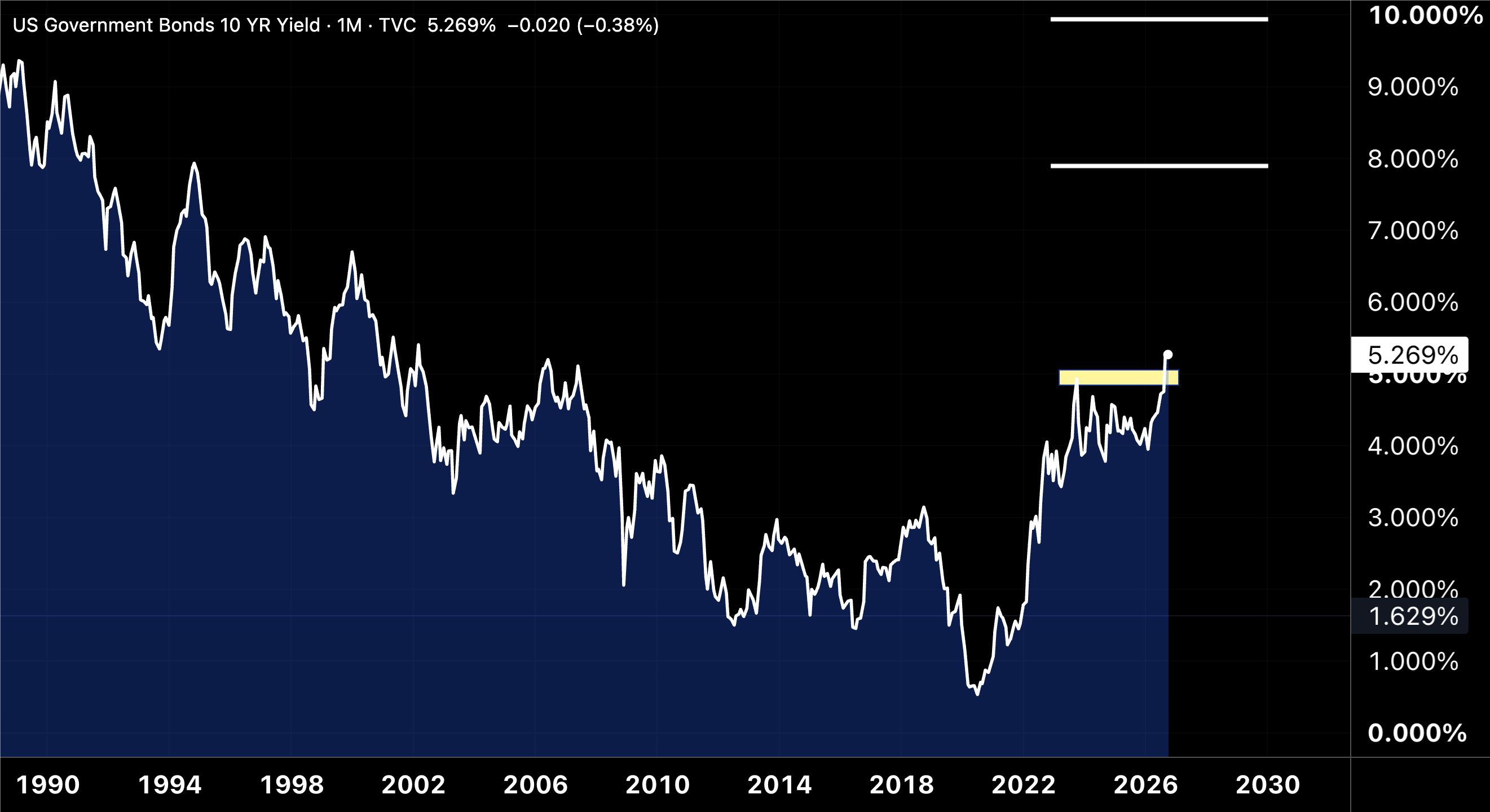
Because creditors are shifting from an infinite willingness to lend money to the US treasury at any rate – to requiring an interest rate high enough to compensate for inflation and credit risks.
And we still don't know what that rate is.
This while the Dollar's reserve currency status is put into question and foreign creditors increasingly need to shore up their own finances at home.
The authorities understand that increasing yields are self-sustaining – and that their cycles are loooong.
A 5% yield could be 6% tomorrow and 8% the day after – and that mountain of debt will have to be re-financed at even higher rates.
We know they tried short-term oriented fixes but they have all boomeranged back faster than we even expected.

Scottie B now understands that he is not the house, and that debt buybacks are not a solution. Meek intervention and empty words won't move this market.
Now what matters is thinking about three questions:
- At what rate does the marginal buyer come in?
- How does that yield curve re-pricing affect financials?
- And how do Real Assets enter the picture?