Flash Philo on Brazil 2026
Is there a second leg?

In a scene from Fast Five from 2011 – Agent Luke Hobbs goes to Brazil to arrest Dom Toretto (played by Vin Diesel) in a carefully planned operation.
But things don't work out as Hobbs planned.
Dom Toretto: And your mistake? Thinking you're in America. You're a loooong way from home..."
Dom Toretto: THIS IS BRAZIL!!!
And with that, Dom's people pull out guns and rifles, instantly turning the tables on Agent Hobbs and his team.
THIS IS BRAZIL! 🇧🇷
The scene is a surprisingly good analogy for what's happening right now with Brazilian bonds and stocks.
Investors are trying to gauge who will win the Presidential Election – in order to position accordingly.
The election comes in two rounds – the first round will be this Sunday, October 4th.
If no candidate wins >50% of the vote, the election goes to runoff, which will take place on October 25th.
The polls show a very tight race between current President Lula and Jair Bolsonaro's son, Flavio. It seems the victor will be decided within a 1-2% margin of error.
Zooming out for Context
Last November, I wrote about the case for a post-Lula Brazil and what the trade could look like.
 Philoinvestor
At the time I believed the likely challenger to Lula would be São Paulo Governor Tarcísio de Freitas.
Many within the Republican party were pressuring Jair Bolsonaro to support Tarcísio – but ultimately he chose his own son, Flavio Bolsonaro.
Since Then
The Bovespa Index is up ~20% on the back of great performance from oil and commodities in general, a strong economy, some progress on inflation and expectations for further drops in interest rates.
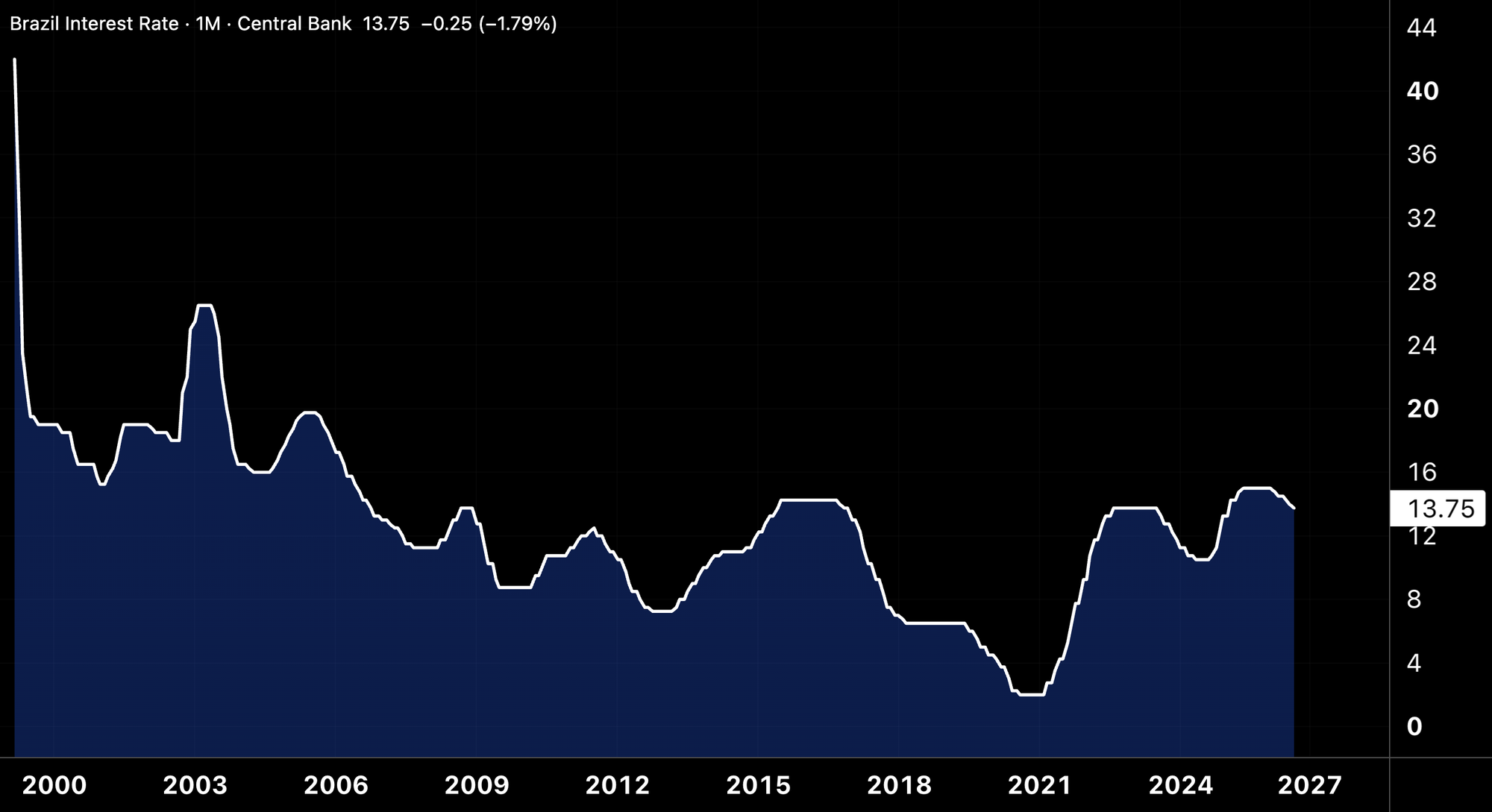
At the time the Selic (base rate) was at 15% – now it's at 13.75%.
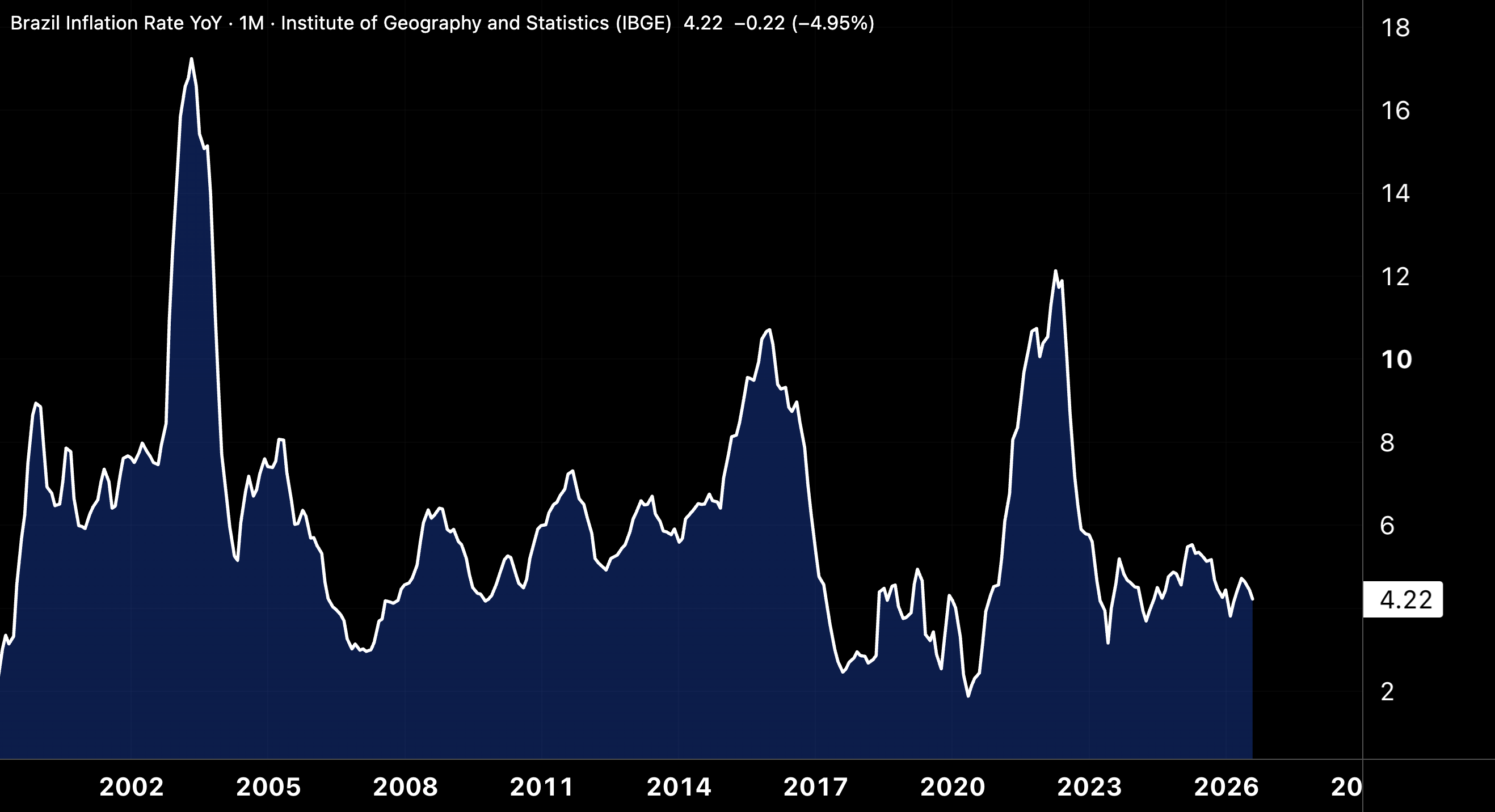
Inflation seems to have peaked post-Covid and now stabilising at ~4% YoY.
That is, if you take this figure as gospel.
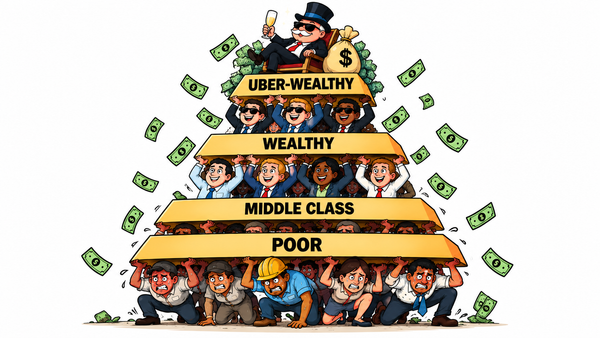
The poorest segments of Brazil's >200mln population are feeling inflation the most – with food prices having increased 50 - 100% since a few years ago.
If salaries are barely moving up but food prices are doubling – this just means people are getting poorer.
Lula's voter base is feeling the pinch, and that's why his approval ratings have been steadily dropping since his highs.
The 10-Year pays a monstrous 14%.
And with inflation at 4% – that's a real return of 10%.
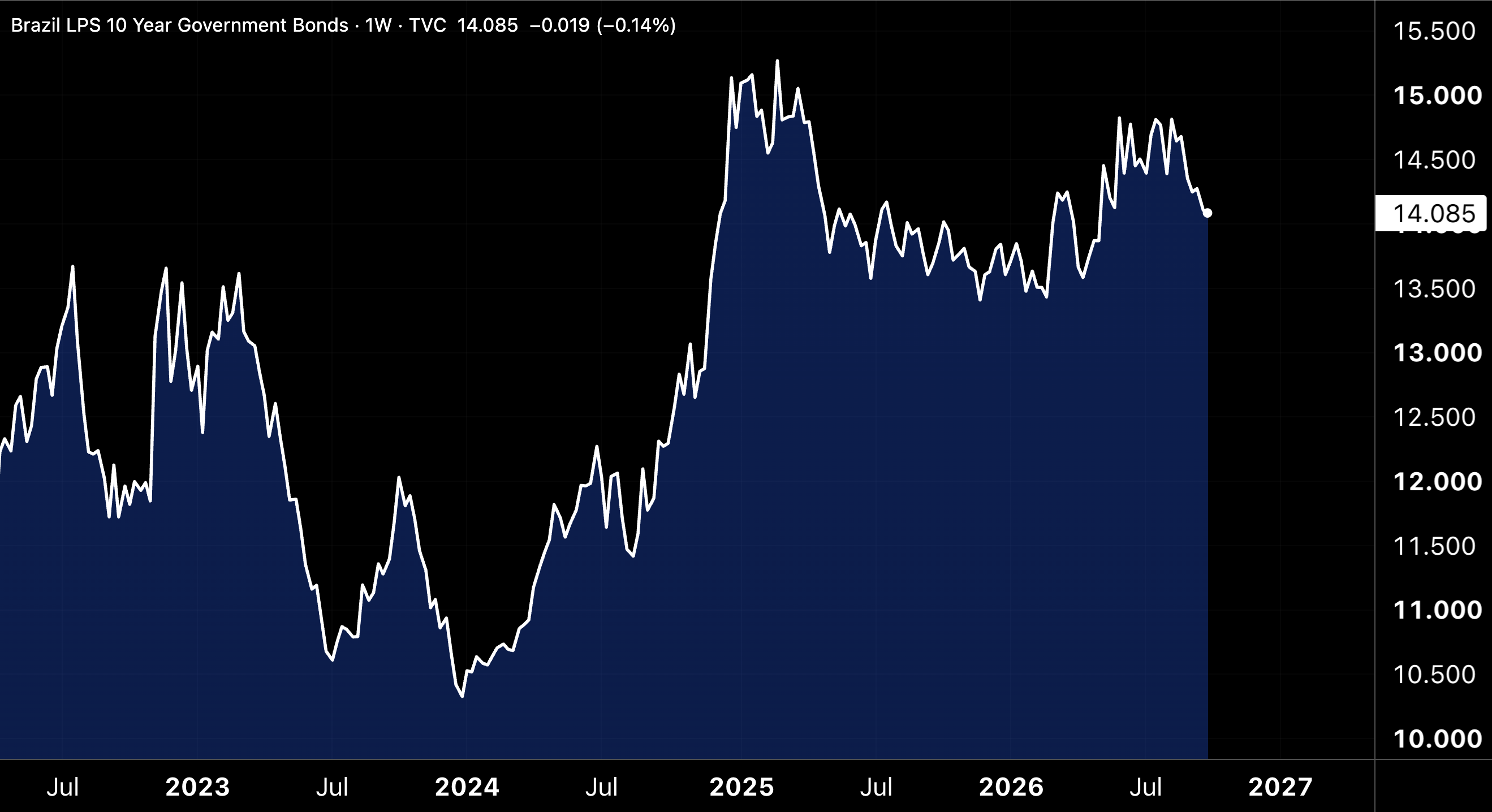
The 10-Year bottomed at ~6% in 2020, and has since been climbing higher.
But in 2025 the picture started to change.
The BOVESPA kept rallying, up 60% since January '25 – with the focus now shifting towards hopes for a new, more pro-business government.
The money didn't hurt either... 👇
Yields moving up 5% within a year also meant the opportunity was much higher – causing some to look through the problems and try to catch a Brazilian falling knife.
This mostly includes domestic institutionals like pension funds who now suddenly earn 15% owning their own government's debt. And are also long the optionality of capital gains on that paper – if yields fall from these levels.
Keeping it (Brazilian) Real!
But why the reversal in momentum?
The Brazilian Real bottomed (i.e. USD/BRL peaked) in November of '24 – and is now almost 20% higher. This means carry traders are no longer trying to catch a falling Real knife as they sell their local currency to buy Brazilian assets.
This could of course change again – and probably will.
From here, we get into the part that matters for investors: what Lula and Bolsonaro would actually do, their plans to tackle Brazil's mounting fiscal issues, and what each scenario could mean for Brazilian assets.