Netflix: Leveraging Distribution
And Charlie Munger's Secret Rule

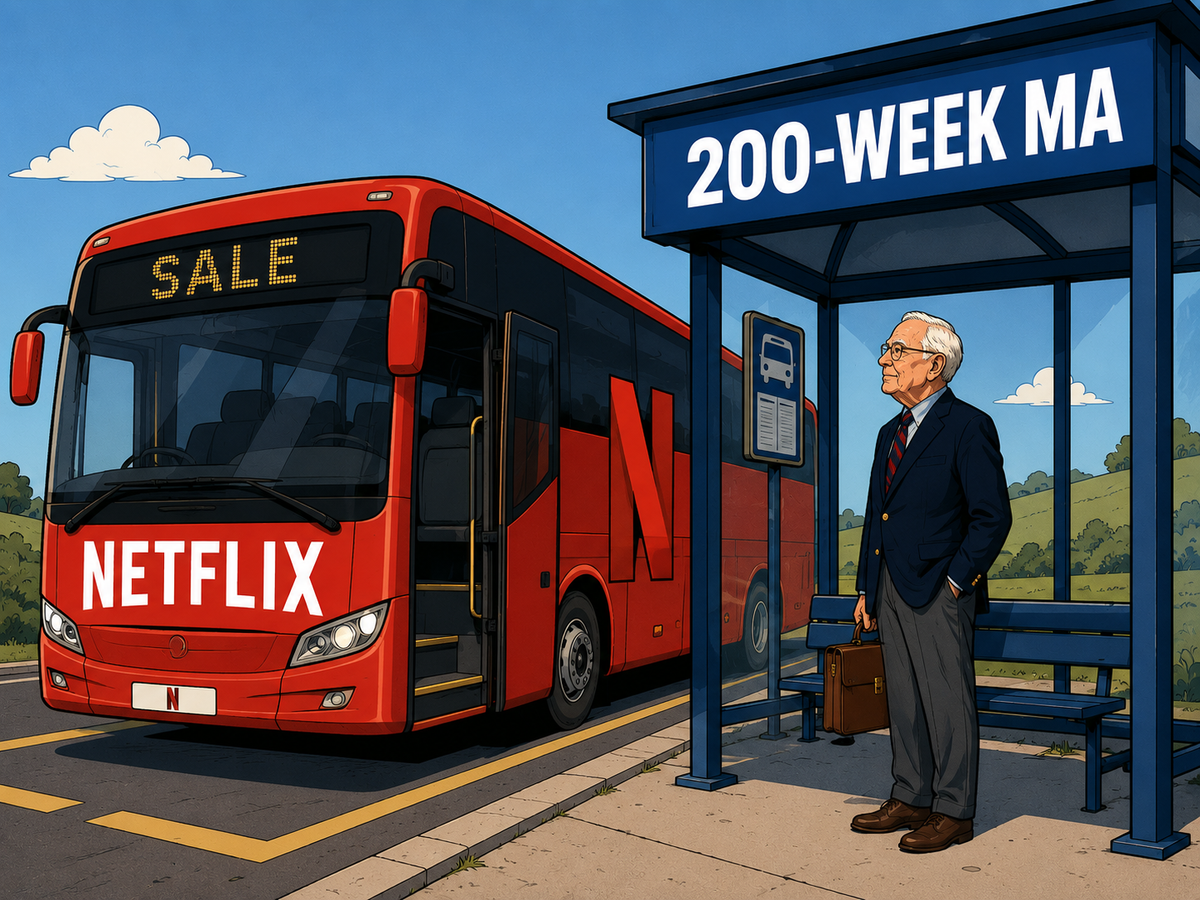
"If all you ever did was buy high-quality stocks on the 200-week moving average, you would beat the S&P500 by a large margin over time. The problem is, few human beings have that kind of discipline."
–Charlie Munger
First off, we don't know if Charlie ever said this. But it doesn't matter because he could have. The quote basically encapsulates a philosophy that is missing from today's financial markets.
Buying On The Cheap
The first time we published on Netflix was in May of '22.
Bill Ackman (i.e. his fund) sold his last share after an earnings report that, in their eyes, warranted a full exit from the global streaming leader. I still remember the headline and the after-market action🔻 in the stock after the event.
The worry was that Netflix had lost subscribers for the quarter, and that growth would now start to be negative. But let's not forget, it was a special time, post-Covid lockdowns and all.
A bigger worry was that Legacy Media was going DTC (Direct to Consumer) and would start to take subscribers from Netflix.
Ackman's exit and the setup was the catalyst that made me start to look into Netflix and the broader media ecosystem – for the first time in my generalist-investor career.
It took years for the market to understand what we tried to explain in this piece – and I see references on the supreme Netflix distribution as the major source of competitive advantage, to this day.
The title I put on the piece summed up the whole setup 👇
Content is King but Distribution is God
On May 14th 2022, I proudly sent out Content is King but Distribution is God to Philoinvestor subscribers.
The piece is now removed from paywall and available for everyone.
 Philoinvestor
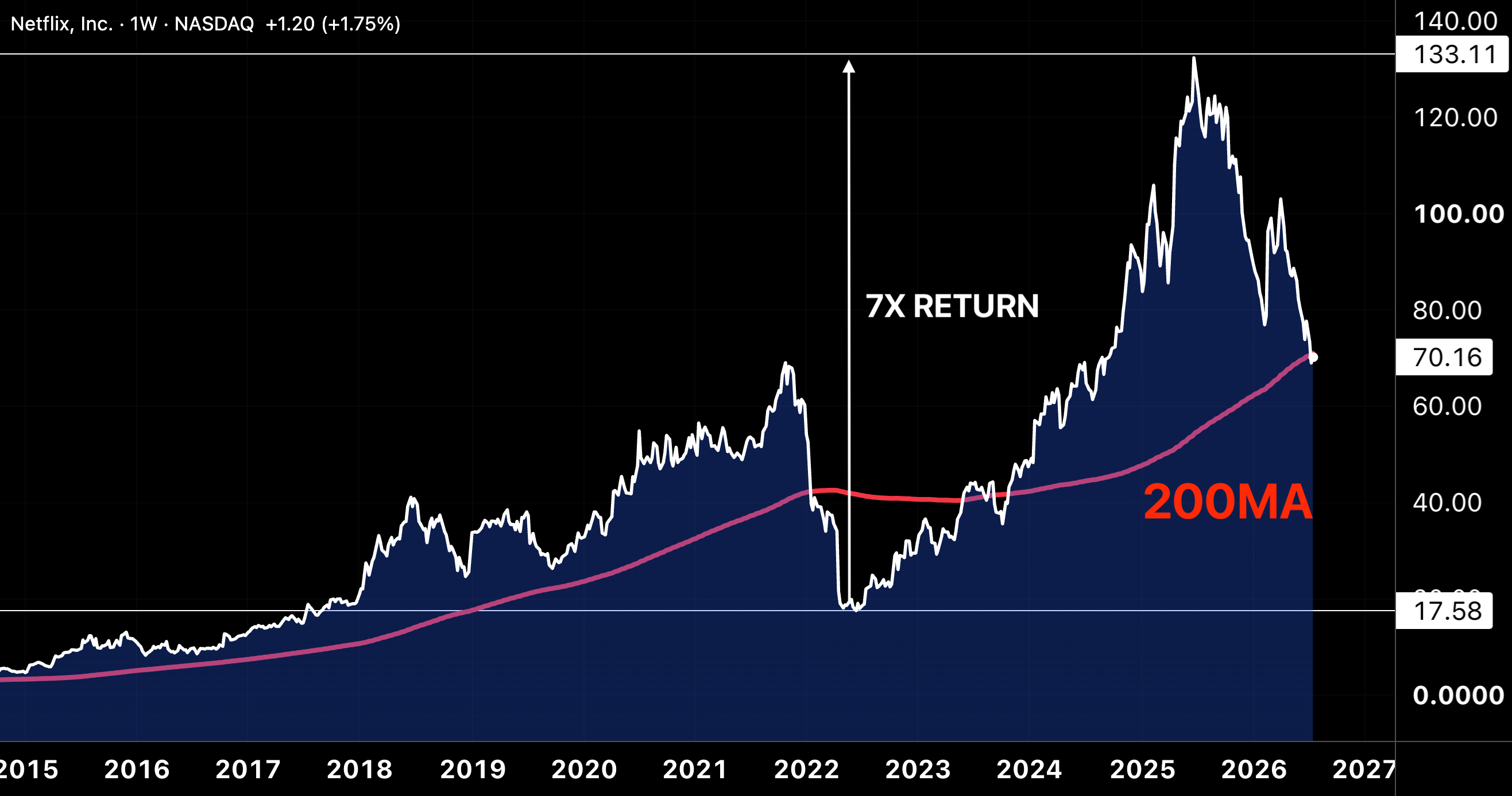
NFLX returned a 7X from the date of publishing since its peak at $133 per share.
It's now back to its 200 Weekly Moving Average, and time to have another look.
A lot has changed since early '22, and the setup is different now than it was.
The read then was simple – you basically (very basically) had to fade the narrative that the Content is King crowd with their legacy content libraries and franchises would beat Netflix at their own game.
Netflix growth is now slowing not only because of more alternatives, but also due to sheer size.
Four years ago, Netflix had roughly 220mln paid subscribers – now it has 330mln paid subscribers and roughly 800mln viewers globally.
Generative AI as a risk to Netflix
The past few years have proven what the risk AI can do to entrenched businesses – not so much in reality as in perception.
We've seen software companies lose billions in value simply on the idea that Anthropic or some other AI company will launch a solution that would "surely" disrupt their business.
To be sure, markets are forward-looking, often discounting the future many years in advance. And this is what many seem to argue when a stock that is severely down still hasn't seen its business affected the slightest...
And up to a point, they are right: The full range of effects from the proliferation of AI technology across the economy has yet to be felt.
The other side of the AI-disruption argument, however, is that these companies aren't just sitting there waiting for AI to disrupt and kill their businesses.
And Netflix is one such example.